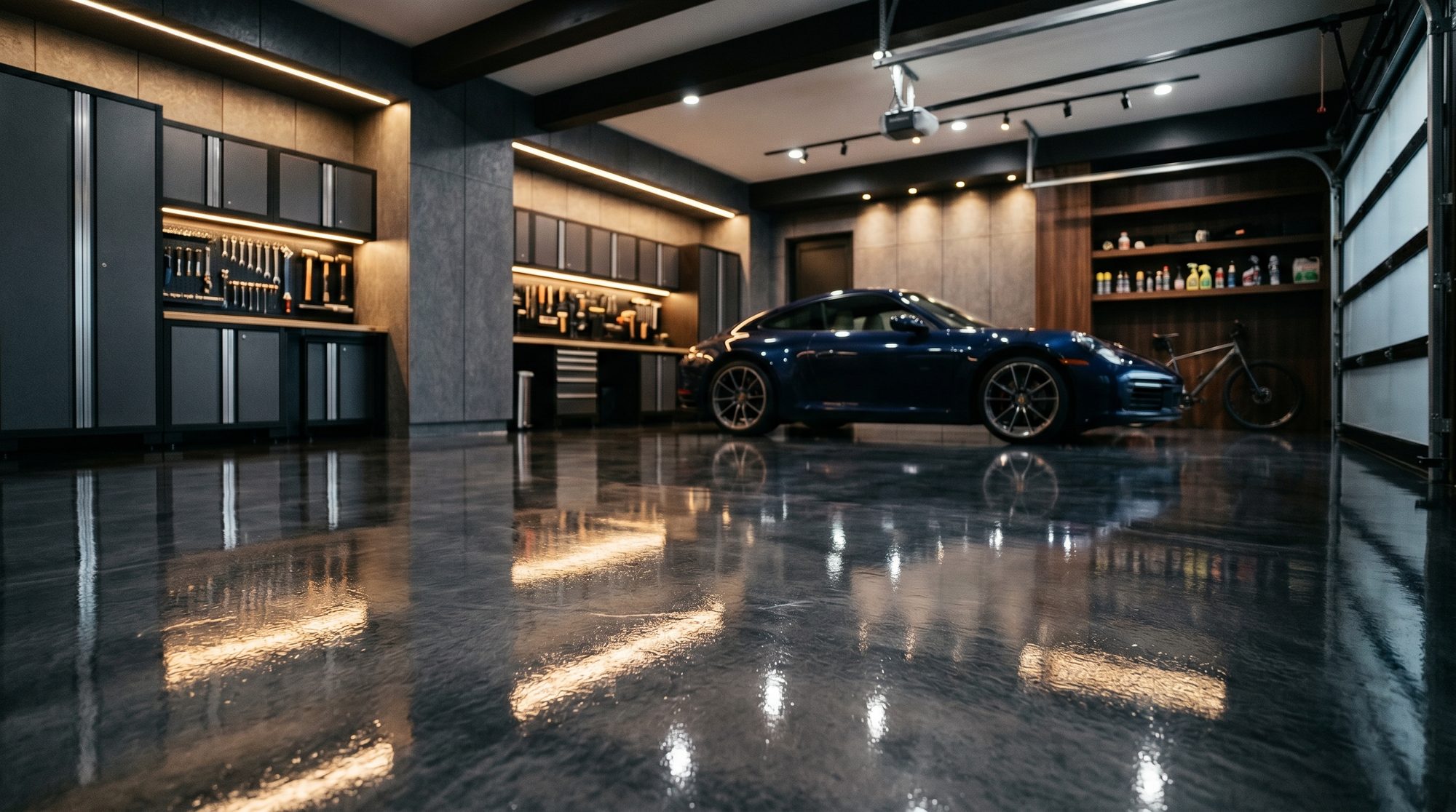
"Polyaspartic" describes a product family, not one universal formulation or outcome. This guide organizes the evidence to request before comparing it with epoxy or another system. The call line records floor-coating interest with the site owner only. No coating contractor is attached, and the call does not assess the slab, recommend a product, estimate, or arrange work.
What the product label does—and does not—tell you
A "polyaspartic" label does not establish formulation, layer, cure, UV performance, temperature window, abrasion resistance, chemical resistance, or suitability for a Cedar City slab. Ask for the exact manufacturer and product, then compare:
- Cure: working time, recoat window, foot and vehicle criteria, temperature and humidity assumptions, and the complete multi-layer schedule.
- UV and color: test method and results, allowed exposure, color-change limitations, finish, maintenance, and warranty.
- Installation conditions: slab and air temperature, moisture, dew point or condensation controls, ventilation, heating, mixing, application, and contingency limits.
Concrete Network's overview supplies general orientation, but it is not a substitute for the proposed manufacturer's current technical and safety data.
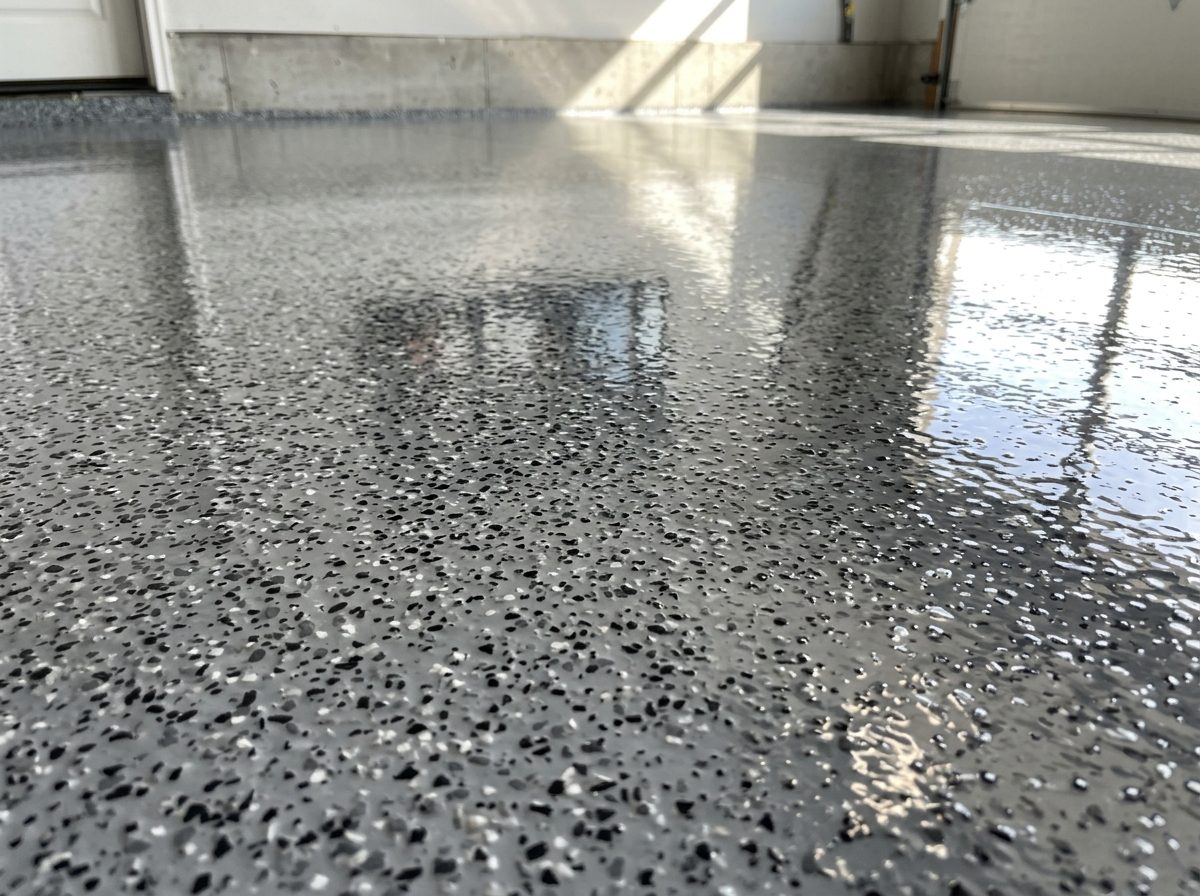
A common system to compare: epoxy or polyaspartic base, flake, clear polyaspartic top.
A common system to compare for Cedar City garages
Marketed systems may use one or several chemistries and layers. Require the bidder to identify the exact primer, base, broadcast, topcoat, coverage or thickness, substrate profile, repairs, moisture limits, texture, cure, maintenance, and warranty. Do not infer which layer bonds, builds thickness, resists UV or abrasion, or fits a garage without the exact manufacturer documents and project conditions. The garage-floor guide provides a broader checklist.
When to request product-specific evidence
- Short downtime: request written working time, recoat window, cure conditions, walk-on and vehicle criteria for every layer under expected conditions.
- Colder or shoulder-season installs. Some polyaspartic products permit lower installation temperatures than some epoxies, but the product data, slab, enclosure, and provider schedule control.
- Sun exposure: request the exact test data, color-change limitations, finish and warranty for the expected exposure; do not accept "no yellowing" as an unsupported guarantee.
- Wear exposure: identify wheels, traffic, impact, chemicals, cleaning and texture, then compare exact abrasion and chemical data. The commercial guide lists operating inputs.
Compare complete epoxy and polyaspartic proposals
Neither family is automatically the smarter or cheaper choice for a basement, storage bay, garage, or shop. Compare slab findings, intended exposure, each named product and layer, preparation, installation limits, cure, maintenance, warranty, and total installed scope. The concrete-coating guide lists the same questions across product families.
Preparation must match the slab and named products
Ask the bidder to document inspection and tests, existing coatings and contamination, moisture results and limits, cracks and repairs, the required surface profile and preparation method, edge work, cleanliness checks, environmental conditions, mixing and application controls, and acceptance criteria. Do not assume diamond grinding, acid preparation, or another method is universally required or sufficient. This site does not predict peeling or service life.
What does polyaspartic cost in Cedar City?
A polyaspartic-topcoat system may price above a straight epoxy build, but no official Cedar City price schedule is published here. Square footage, slab condition, repairs, access, product, and cure requirements all move the number; request a written provider quote and confirm any estimate fee or terms directly. This site does not publish or guarantee a local price.
Polyaspartic questions, answered
Is polyaspartic better than epoxy?
Not as a general rule. Compare exact products and full systems using slab findings, intended exposure, manufacturer limits and test data, preparation, installation conditions, cure, maintenance, warranty, and total quote.
Can polyaspartic really be installed in a Cedar City winter?
It depends on the product, slab and air temperature, moisture, and whether the space is enclosed or heated. Some polyaspartic products allow colder installation conditions than some epoxies; a provider you locate independently must confirm timing and requirements for the specific job.
How fast can I use the floor?
Fast-cure products may shorten the wait, but walk-on and vehicle-ready windows vary by product, temperature, moisture, and build. Ask a provider you locate independently for the written cure schedule.
Does polyaspartic yellow over time?
This site makes no no-yellowing promise. Request the exact formulation's UV and color test data, exposure limitations, maintenance terms, and written warranty, and ask how appearance will be evaluated.
How should I interpret polyurea and polyaspartic labels?
Ask for the exact manufacturer and product rather than relying on a marketing family name. Review its safety data, technical data, intended system layer, substrate and exposure limits, cure, performance tests, maintenance, and warranty.
Can an independent provider install polyaspartic outside Cedar City?
No coating contractor is currently attached to this site. If one is selected later, verify its capabilities, service area, credentials, timing, and price directly before engagement; this call does not arrange service.