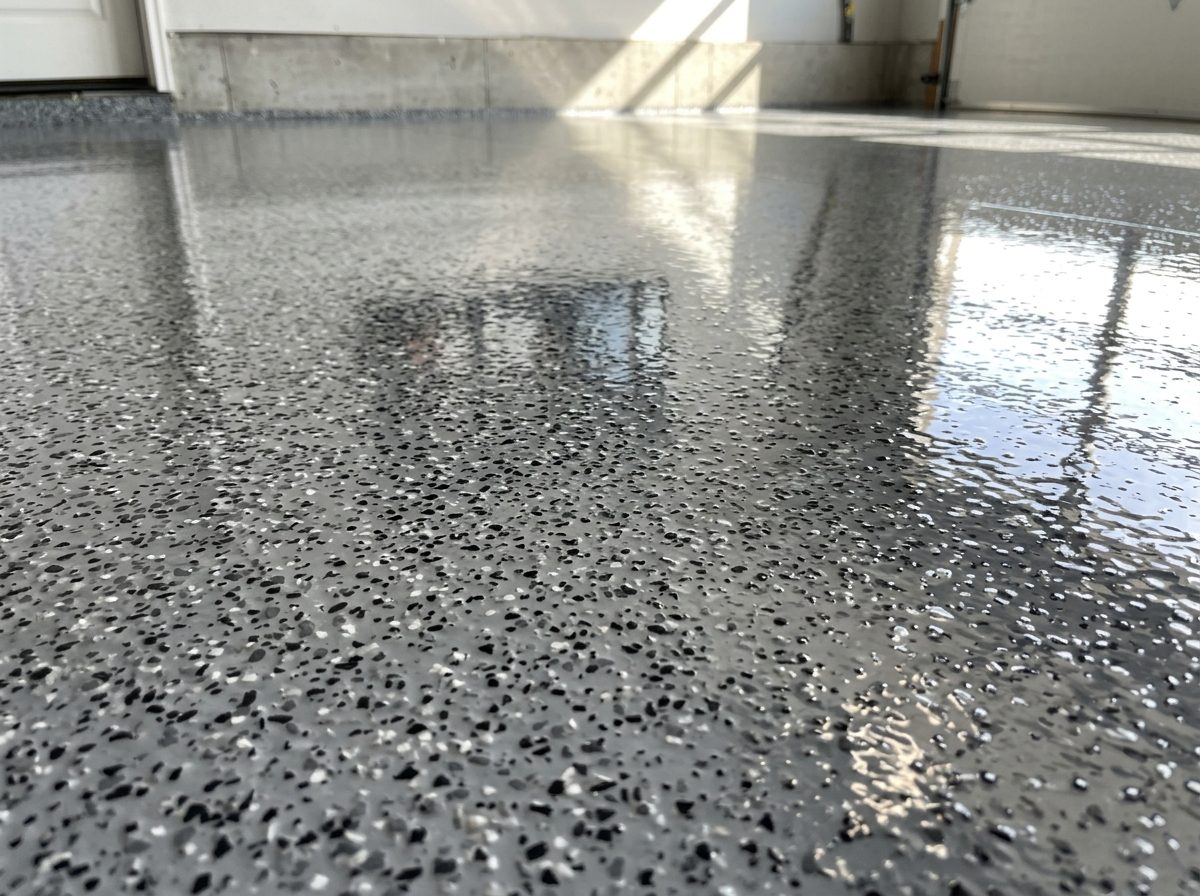
A commercial-floor proposal should respond to the actual operation, slab, contaminants, traffic, cleaning, safety requirements, downtime, phasing, and manufacturer instructions. This guide helps a Cedar City business compare those inputs. The call line records project interest with the site owner only. No coating contractor is attached, and the call does not inspect, estimate, schedule, or arrange work.
Start with the use and exposure—not the product label
- Auto shops and service bays. Record vehicles, tires, oils, fuels, cleaners, welding, impact, heat, drains, slip concerns, and regulatory or insurer requirements.
- Retail and showroom floors. Record foot traffic, entrances, sunlight, displays, cleaning, accessibility, texture, appearance, and operating-hour limits.
- Warehouses and storage. Record vehicle and wheel types, rack or equipment loads, joints, impacts, contaminants, striping, and shutdown constraints.
- Food or wet-process areas. Record sanitation and regulatory requirements, drainage, temperatures, chemicals, washdown, cove and joint details, and slip testing.
- Gyms, salons, clinics, and other occupied spaces. Record chemicals, cleaning, odors and ventilation, texture, infection-control or licensing needs, and return-to-occupancy criteria.
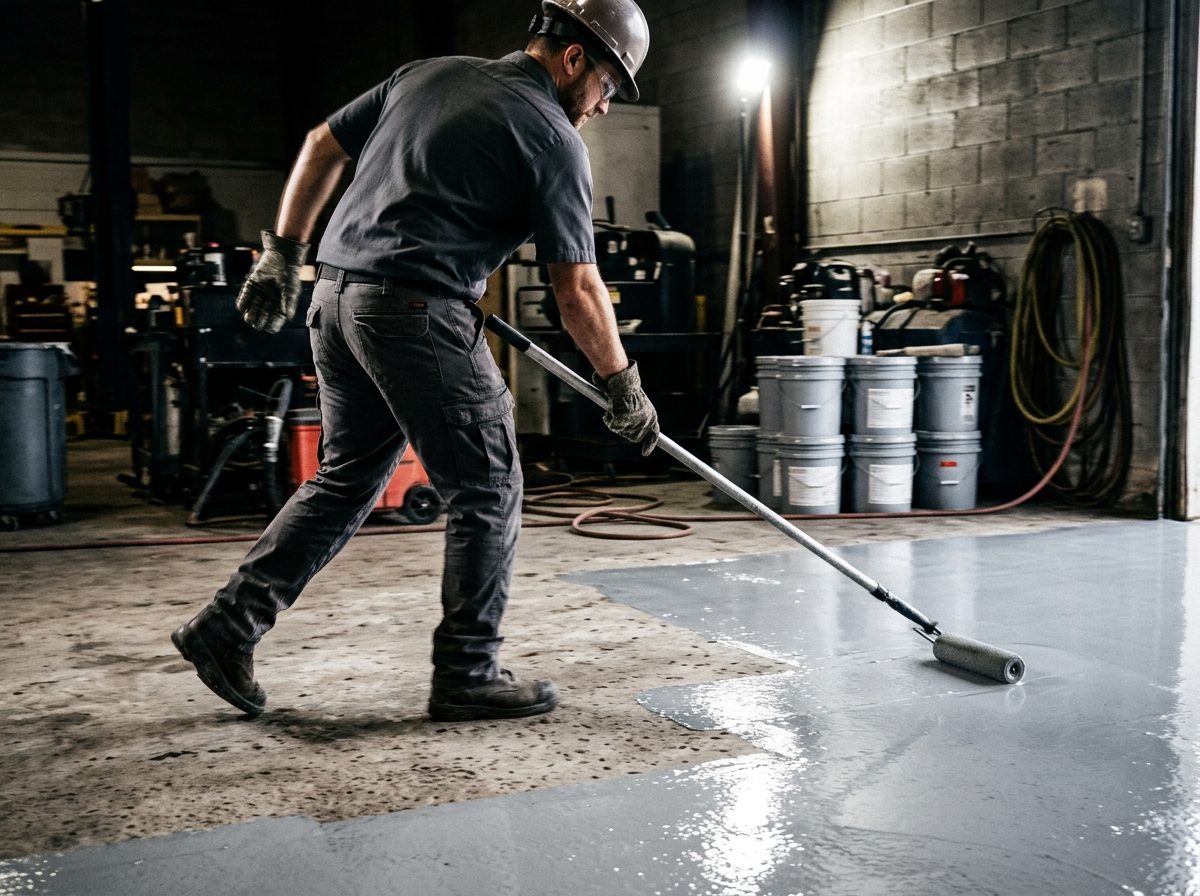
Commercial builds trade some looks for thickness, texture, and turnaround.
What makes a system "commercial-grade"
"Commercial-grade" is not a complete specification. Require each bidder to identify:
- Named system. Manufacturer, exact products, substrate and exposure limits, primer, coats, coverage or thickness, finish, texture, color, and substitutions.
- Walking and working surface plan. Required standard, test method and target, proposed texture or additive, footwear and contaminant assumptions, cleaning, and the trade-off between traction and cleanability. OSHA's walking-working surfaces rule is one source to review; the responsible safety professional must determine applicability.
- Details and transitions. Joints, cracks, drains, coves, edges, penetrations, walls, striping, equipment bases, and interfaces with other flooring.
- Slab findings and preparation. Existing systems, contamination, moisture tests and limits, repairs, surface-profile method, dust and odor control, acceptance criteria, and exclusions.
If timing matters, compare the exact product data, installation conditions, coat sequence, cure criteria, ventilation, testing, contingency, and written return-to-service time. The polyaspartic guide lists questions without promising that one chemistry will shorten a particular shutdown.
Downtime: the real commercial question
Operational constraints can be as important as material cost. Ask whether these options are feasible and get the conditions in writing:
- Off-hours work. Confirm staffing, access, noise, odor, ventilation, security, inspection, cure, and premium terms.
- Phasing. Confirm boundaries, transitions, traffic separation, moving equipment, contamination control, and whether operations can safely continue.
- Product and cure schedule. Compare manufacturer-documented application windows and return criteria for the complete build under the expected conditions.
A commercial quote should state the return-to-service plan in writing, per section, before work starts.
What does commercial epoxy cost in Cedar City?
Commercial work is often quoted per square foot, but no official Cedar City price schedule is published here. Total system thickness, slab condition and repair scope, texture and cove details, access, and scheduling constraints all move the number; residential-kit internet figures do not transfer to commercial builds. Request a written, itemized provider quote and confirm any walkthrough fee and scope directly.
One honest caveat
Do not assume any commercial slab should receive epoxy or another film. Refrigerated or temperature-sensitive spaces, moisture, contamination, movement, safety rules, sanitation, demolition plans, and incompatible existing systems may change the available options. Require documented findings and named-product suitability; the concrete coating guide provides a comparison checklist.
Commercial flooring questions, answered
How long will my business be closed for the install?
Closure and phasing depend on the system, slab condition, space, operating hours, and cure requirements. Ask a provider you locate independently whether off-hours or phased work is available and require the return-to-service schedule in writing.
Can an independent provider coat an old shop floor with oil stains?
No coating contractor is currently attached to this site. If one is selected later, verify its capabilities, service area, credentials, timing, and price directly before engagement; this call does not arrange service.
Will the floor be slippery when wet?
Slip performance depends on the full system, texture, contaminants, footwear, cleaning, and use. Ask each bidder to document the proposed slip-resistant additive or texture and how it fits the space; no coating makes a wet floor risk-free.
How long does a commercial epoxy floor last?
Service life varies with slab condition, preparation, total build, traffic, chemicals, maintenance, and installation quality. Ask for product data, comparable attributable work, maintenance requirements, and the written warranty for the proposed system.
Can an independent provider handle small spaces — a salon, a single bay?
No coating contractor is currently attached to this site. If one is selected later, verify its capabilities, service area, credentials, timing, and price directly before engagement; this call does not arrange service.
Can an independent provider serve businesses outside Cedar City?
No coating contractor is currently attached to this site. If one is selected later, verify its capabilities, service area, credentials, timing, and price directly before engagement; this call does not arrange service.