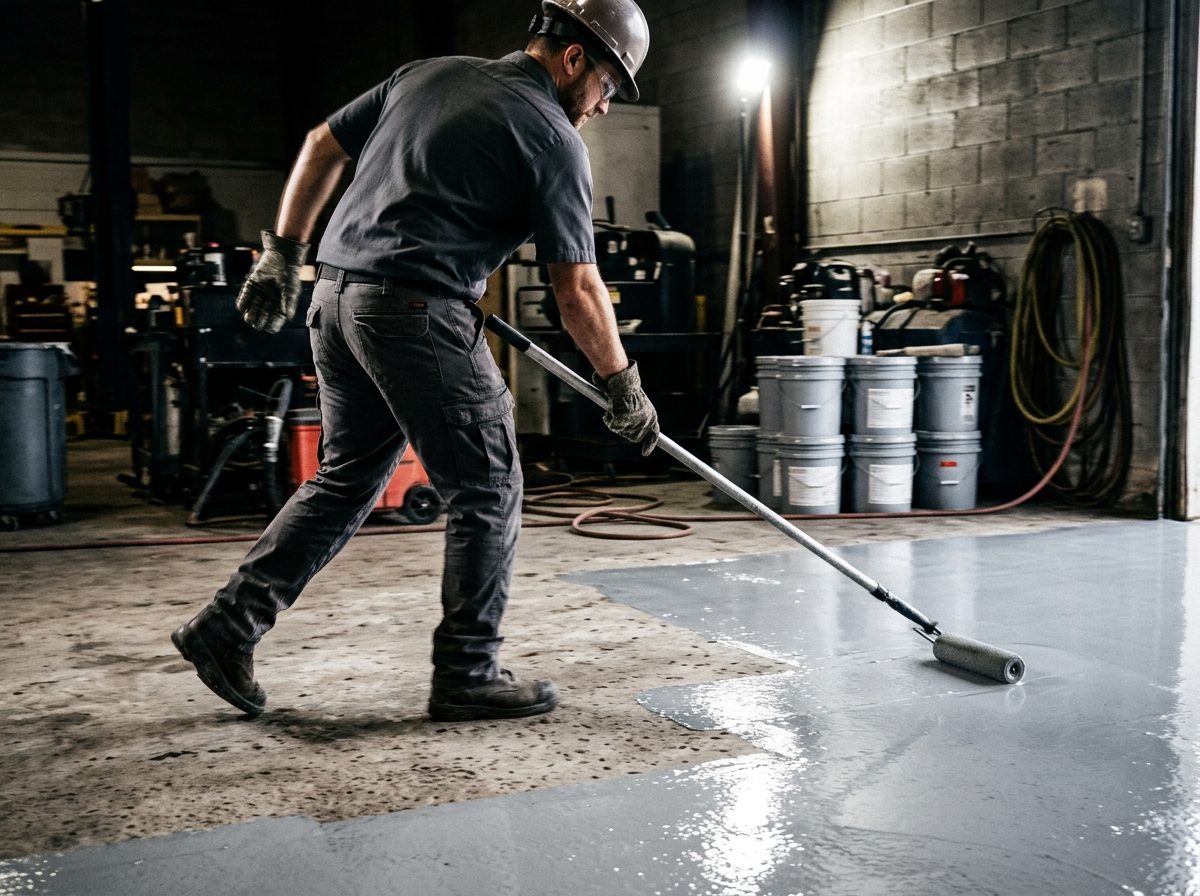
Words such as epoxy, polyaspartic, polyurea, and sealer identify broad product families, not a complete or interchangeable specification. Start with the actual slab, use, exposure, desired finish, safety and maintenance needs, then compare exact manufacturer documents and complete system builds. The call line records project interest with the site owner only. No coating contractor is attached, and the call does not inspect, recommend, estimate, or arrange work.
Questions to ask about each product family
- Epoxy: What exact resin and hardener, primer, coat thickness or coverage, substrate profile, temperature and moisture limits, UV and chemical data, cure, maintenance, and warranty are documented?
- Polyaspartic: What exact formulation, intended layer, working time, temperature and moisture limits, UV and abrasion test data, cure, return-to-service criteria, and warranty apply? See the polyaspartic question guide.
- Polyurea: What exact product does the label describe, who manufactures it, and what published substrate, mixing, application, performance, cure, and safety data apply?
- Sealer or stain: Is it penetrating or film-forming, what substrates and exposures does the manufacturer allow, how does it change appearance or traction, and what reapplication and maintenance are required?
Do not choose interior versus exterior use from a broad chemistry label. Slab moisture and condition, water and sunlight exposure, temperature, vapor transmission, traffic, chemicals, drainage, traction, appearance, maintenance, and the exact product instructions all matter. Concrete Network's overview is general orientation, not manufacturer documentation or a project recommendation.
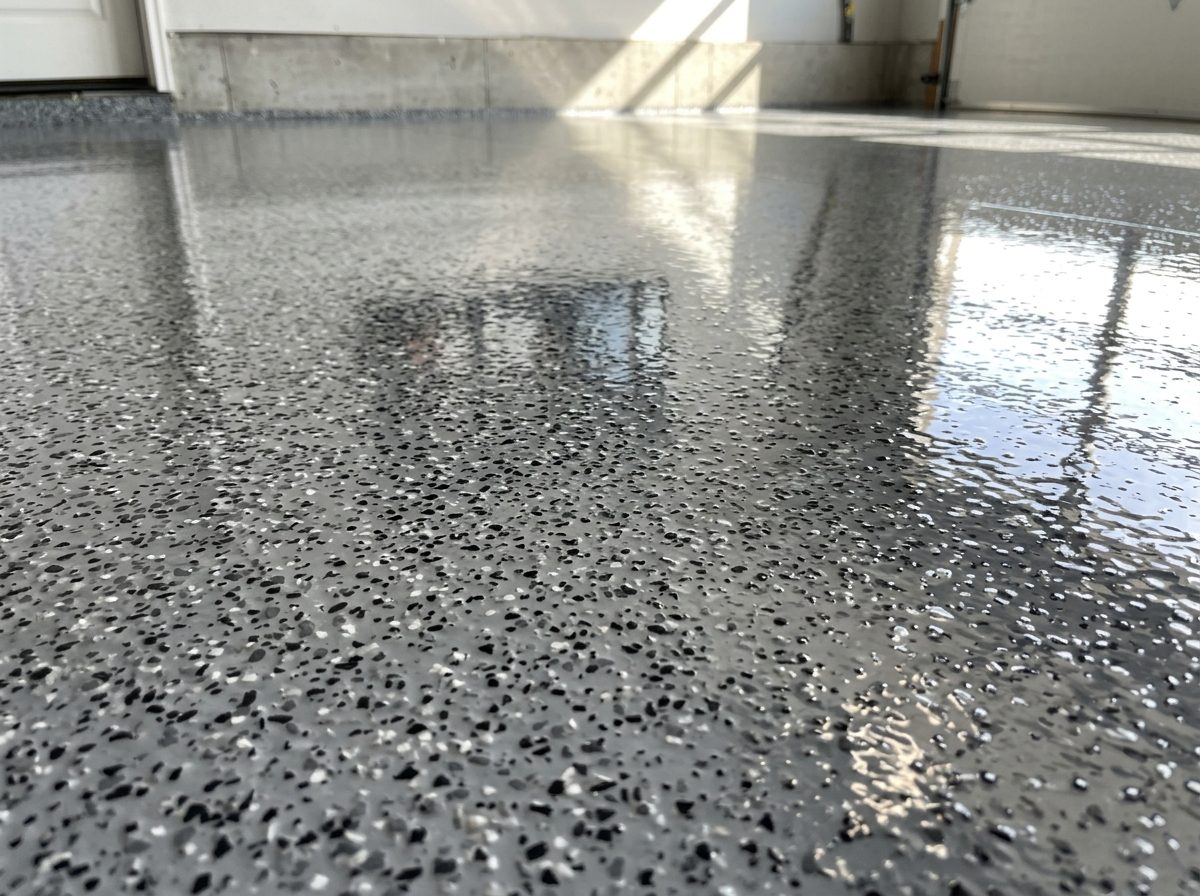
Illustrative coating layers; confirm every product and layer in the proposed system.
Which coating for which space
Garages
Record vehicles, tires, water and deicers, chemicals, sunlight, texture, cleaning, existing sealers, cracks, moisture, and downtime. Ask the bidder to tie the full named system and warranty to those inputs. The garage-floor guide lists comparison questions.
Basements
Record moisture evidence and testing, existing finishes, cracks, intended occupancy, ventilation, odor and cure constraints, cleaning, texture, and transitions. Ask which manufacturer limits and building requirements apply; this site does not prescribe a base coat or predict blistering.
Shops and small commercial spaces
Record actual traffic and wheel loads, equipment, impacts, chemicals, sanitation, slip requirements, cleaning, joints, downtime, and regulatory needs. Ask the responsible professionals to specify and document any thickness, texture, additive, or other system response. See the commercial comparison guide.
Patios and exterior concrete
For exterior concrete, record slab condition, moisture and drainage, freeze exposure, sunlight, temperature, traffic, deicers and chemicals, traction, appearance, maintenance, and reapplication expectations. Ask which exact products the manufacturer allows for those verified conditions; this page does not prescribe a film, siloxane, or other sealer.
Verify the actual Cedar City slab and exposure
A Cedar City address does not establish slab moisture, vapor transmission, strength, profile, contamination, prior treatment, cracking, freeze exposure, sunlight, traffic, chemicals, or drainage. Document the actual conditions and ask a contractor to cite the exact product requirements and exclusions.
Match preparation to the slab and named system
Ask each bidder to document inspection and testing, contamination removal, existing-coating removal, moisture results and limits, repairs and exclusions, the specified surface profile and preparation method, edge work, cleanliness and acceptance checks, environmental conditions, and every product layer. Diamond grinding, shot blasting, acid preparation, or another method may or may not comply with a particular system and slab; the current manufacturer instructions and project documents should control. This site does not predict service life or peeling.
What does concrete coating cost in Cedar City?
Three things move the number: square footage, slab condition (repairs add labor), and the system—a straight sealer may cost less than a full flake-and-topcoat build. No official Cedar City price schedule is published here; internet estimates are orientation only, not a local quote. Request a written quote and confirm estimate fees and terms with the independent provider. This site does not publish or guarantee a local price.
Cedar City concrete coating questions, answered
How do I compare epoxy with a concrete sealer?
Compare exact products rather than family labels. Ask whether each is film-forming or penetrating and review the manufacturer's allowed substrate, preparation, moisture and temperature limits, appearance, traction, chemical and UV data, cure, maintenance, reapplication, and warranty for the actual exposure.
Can an independent provider coat a basement floor in Cedar City?
No coating contractor is currently attached to this site. If one is selected later, verify its capabilities, service area, credentials, timing, and price directly before engagement; this call does not arrange service.
Should I coat my patio or driveway?
This site cannot choose remotely. Document the slab, moisture and drainage, climate and sunlight exposure, traffic, deicers and chemicals, traction, appearance, maintenance, and repair plans, then compare only exact products whose manufacturers allow those conditions.
Is polyurea better than epoxy?
Not as a general rule. Ask for the exact manufacturer, product, system layer, substrate and exposure limits, test data, installation conditions, cure, maintenance, warranty, and price. Marketing family names do not prove suitability or performance.
How long does a coating project take?
Duration, phasing, and walk-on time depend on slab condition, system, temperature, moisture, and cure requirements. Ask a provider you locate independently for a written installation and return-to-service timeline.
Can an independent provider handle towns outside Cedar City?
No coating contractor is currently attached to this site. If one is selected later, verify its capabilities, service area, credentials, timing, and price directly before engagement; this call does not arrange service.